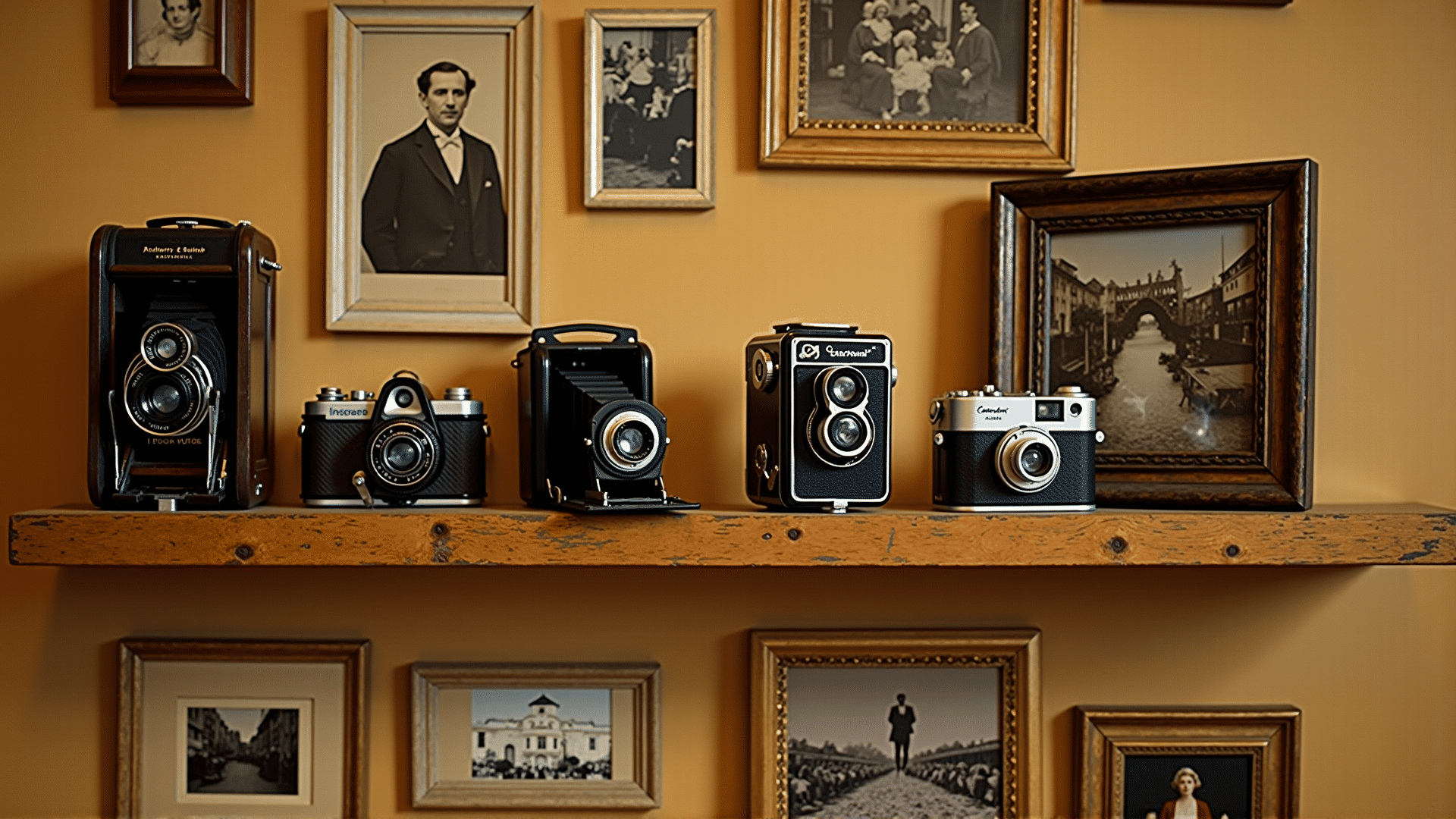
From its early beginnings to its current status as a revered art form, the development of photography offers a fascinating narrative of human ingenuity and creativity. Its trajectory mirrors significant advances in technology while reflecting societal changes and artistic trends throughout the centuries.
The journey began in the early 19th century when the first successful image was captured by Joseph Nicéphore Niépce. His process, known as heliography, involved an eight-hour exposure and utilized bitumen-coated pewter plates. It paved the way for Louis Daguerre, who developed the daguerreotype in 1839, offering sharper images and reduced exposure times. This breakthrough marked the official birth of photography, turning it into a more accessible medium.
The mid-19th century saw rapid technological advancements with the introduction of wet plate collodion processes by Frederick Scott Archer. This offered greater clarity and more exposure versatility. Around this time, photographers like Mathew Brady earned recognition for capturing powerful images of the American Civil War, providing an unfiltered glimpse into the realities of conflict.
As the 20th century dawned, photography began to forge its own path as a recognized art form. Pioneers like Alfred Stieglitz advocated for its artistic potential, founding influential galleries and publications. His promotion of modernism shifted photography's purpose from mere documentation to an expressive art form capable of evoking emotion.
With the arrival of color photography in the mid-20th century, led by innovators like William Eggleston, the medium broadened even further. Eggleston's work depicted everyday scenes with profound vibrancy, challenging traditional aesthetic norms and broadening the definition of art.
The digital revolution in the late 20th to early 21st centuries transformed photography once more. Images could now be captured, processed, and shared instantly, dissolving traditional constraints. This era also witnessed a surge in the democratization of photography, empowering individuals worldwide to become image-makers through accessible devices.
Today, photography is a dynamic component of contemporary art, often featured in galleries and exhibitions worldwide. Legendary figures such as Ansel Adams, known for his majestic landscapes, and Dorothea Lange, celebrated for her poignant depictions of the Great Depression, continue to inspire new generations of photographers.
In the current landscape, photography plays a critical role in social discourse, shaping public perception and narrative through impactful visual storytelling. It stands as a testament to the unyielding human desire to capture, interpret, and share the world around us.
As we trace the lineage of photography, we celebrate not only the technological strides but also the passionate individuals who have championed its evolution, ensuring it remains a cornerstone of artistic endeavor and human expression.